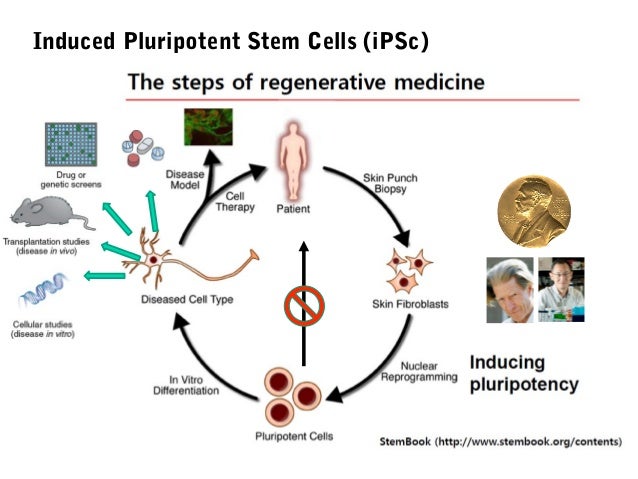
The 2012 nobel prize in physiology or medicine was awarded jointly to john b. gurdon of the university of cambridge in england and shinya yamanaka of . Differentiated cells can be reprogrammed to pluripotency and other cell fates by treatment with defined factors. the discovery of induced pluripotent stem cells (ipscs) has opened up unprecedented opportunities in the pharmaceutical industry, in the clinic and in laboratories. Jul 26, 2019 in 2006, kazutoshi takahashi and shinya yamanaka reported for the first time the reprogramming of induced pluripotent stem cells (ipsc) from . Somatic cells induced pluripotent stem cells yamanaka have been reprogrammed into pluripotent stem cells by introducing a combination of several transcription factors, such as oct3/4, sox2, klf4 and c-myc. induced pluripotent stem (ips) cells from a patient's somatic cells could be a useful source for drug discovery and cell transplantati.

Dental Pulp Stem Cell Banking Leaders In Stem Cell Banking

Induced Pluripotent Stem Cells 10 Years After The
Encouraging results at anova stem cell center. regenerative medicine. talk to our experts about your possibilities. contact us!. Ipsc are derived from skin or blood cells that have been reprogrammed back into an embryonic-like pluripotent state that enables the development of an . Search for stem cells stem cells. whatever induced pluripotent stem cells yamanaka you need, whatever you want, whatever you desire, we provide.
Best Price Guarantee
Recorded on september 14, 2010 using a flip video camcorder. Induction of pluripotent stem cells from mouse embryonic and adult fibroblast cultures by defined factors. differentiated cells can be reprogrammed to an embryonic-like state by transfer of nuclear contents into oocytes or by fusion with embryonic stem (es) cells. little is known about factors that induce this reprogramming. Induced pluripotent stem cells (also known as ips cells or ipscs) are a type of pluripotent stem cell that can be generated directly from a somatic cell. the ipsc technology was pioneered by shinya yamanaka ’s lab in kyoto, japan, who showed in 2006 that the introduction of four specific genes (named myc, oct3/4, sox2 and klf4 ), collectively known as yamanaka factors, encoding transcription factors could convert somatic cells into pluripotent stem cells. Sep 28, 2018 peter karagiannis, ayaka nakauchi, and shinya yamanaka induced pluripotent stem cells (ipscs) describe somatic cells that have been .
Induction of pluripotent stem cells from mouse embryonic and adult fibroblast cultures by defined factors. cell. 2006 aug 25;126(4):663-76. doi: . Induced pluripotent stem cells (ipscs) are somatic cells that have been the genes encoding the four yamanaka factors are individually packaged into different . Jun 01, 2015 · in 2006, kazutoshi takahashi and shinya yamanaka reprogrammed mice fibroblast cells, which can produce only other fibroblast cells, to become pluripotent stem cells, which have the capacity to produce many different types of cells. takahashi and yamanaka also experimented with human cell cultures in 2007.
The proteins, known as yamanaka factors, are commonly used to transform adult cells into induced pluripotent stem cells, or ips cells. induced pluripotent stem cells can become nearly any type of cell in the body, regardless of the cell from which they originated. they’ve become important in regenerative medicine and drug discovery. Two of us (takahashi and yamanaka) hypothesized that genes specifically expressed in escs contribute to the characteristics of escs, such as the capacity for .

Reflecting On The Discovery Of The Decade Induced
Jun 9, 2017 takahashi k, yamanaka s. induction of pluripotent stem cells from mouse embryonic and adult fibroblast cultures by defined factors. cell. 2006 . The breakthrough won yamanaka the nobel prize for physiology or medicine in 2012. [photo: chris goodfellow, gladstone institutes] ten years ago, one visionary scientist revolutionized biological research by discovering how to convert mature cells, such as skin cells, into stem cells using four key genes. this remarkable breakthrough produced cells called induced pluripotent stem cells (ipscs), and would eventually win the researcher, shinya yamanaka, md, phd, the nobel prize for physiology. The discovery of shinya yamanaka, md, phd, of how to make pluripotent stem cells from skin cells was induced pluripotent stem cells yamanaka a watershed moment in the fields of biology and medicine. the breakthrough won yamanaka the nobel prize for physiology or medicine in 2012. Ten years after shinya yamanaka published his nobel prize-winning discovery of induced pluripotent stem cells, there's been rapid progress in some areas and major challenges in others.
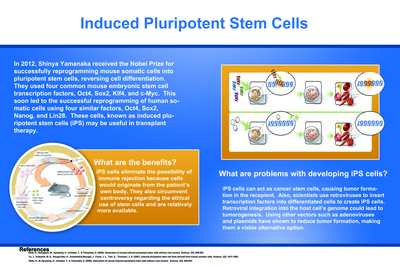
Somatic cells have been reprogrammed into pluripotent stem cells by introducing a combination of several transcription factors, such as oct3/4, sox2, klf4 and c-myc. induced pluripotent stem (ips) cells from a patient's somatic cells could be a useful source for drug discovery and cell transplantation therapies. More induced pluripotent stem cells yamanaka images.
Jun 15, 2013 the recently developed induced pluripotent stem cell induced pluripotent stem cells yamanaka (ipsc) technology, which enables the induction of pluripotency in mature somatic cells by . Quickly and easily isolate virtually any cell type. request a demo. Enrollment only $599! interest free financing available. call today to find out more.
Induced pluripotent stem cells: opportunities and challenges.
In 2006, kazutoshi takahashi and shinya yamanaka reprogrammed mice fibroblast cells, which can produce only other fibroblast cells, to become pluripotent stem cells, which have the capacity to produce many different types of cells. takahashi and yamanaka also experimented with human cell cultures in 2007. See more videos for induced pluripotent stem cells yamanaka. Differentiated cells can be reprogrammed to an embryonic-like state by transfer induced pluripotent stem cells yamanaka of nuclear contents into oocytes or by fusion with embryonic stem (es) cells. little is known about factors that induce this reprogramming. here, we demonstrate induction of pluripotent stem cells from mouse embryonic or adult fibroblasts by introducing four factors, oct3/4, sox2, c-myc, and klf4, under es cell.


0 comments:
Post a Comment